
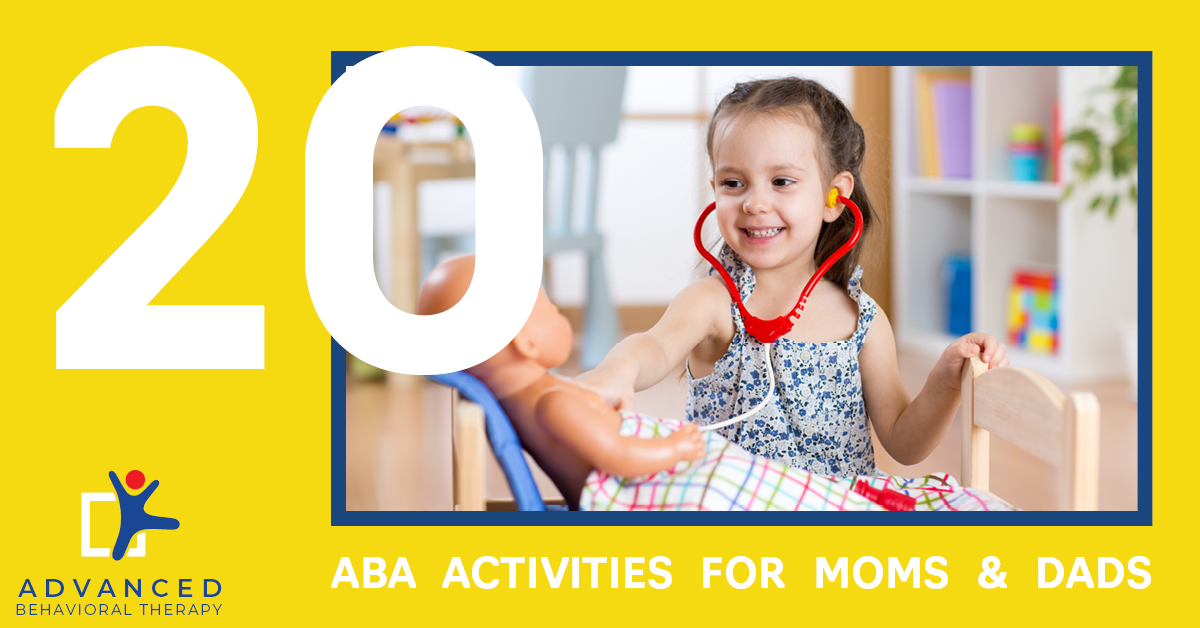
We’re definitely proponents of getting your child with ASD the therapy they need (after all, that’s what we do). But the reality is, what a therapist does with your child the occasional times they are with them is NOT enough. All therapies, and especially ABA therapy, are most effective when the behaviors and life skills taught in the therapy session are also practiced at home.
Hier sind 20 Aktivitäten, die Sie zu Hause mit Ihrem Kind durchführen können, um genau das zu erreichen:
- Helfer der Gemeinschaft. Stellen Sie Ihrem Kind die verschiedenen Helfer der Gemeinde durch Verkleidungsspiele, Bücher oder phantasievolles Spielen mit Little People oder ähnlichem Spielzeug vor. Informieren Sie Ihr Kind über die Aufgaben der einzelnen Helfer, wo es sie sehen kann, und beantworten Sie alle Fragen, die es hat. Sie können Ihr Kind sogar zu einem Treffen mit den Helfern der Gemeinde mitnehmen, z. B. mit der Feuerwehr, der Post, der Polizei und anderen.
- Spieltermin. Set up a play date with your child’s therapist, and another child and their therapist. Have the children practice the social skills and play skills they’ve learned in therapy. You can set up this special kind of play date in a public setting, such as a playground, or in your home.
- Abwechselnd. Lassen Sie Ihr Kind mit seinen Freunden oder Geschwistern ein Spiel spielen, bei dem es darum geht, die Reihe zu übernehmen. Die anderen Spieler können Ihrem Kind vormachen, wie man sich richtig verhält.
- Soziale Gruppen. Sprechen Sie mit Ihrem ABA-Therapeuten über die Einrichtung einer sozialen Gruppe mit Ihrem Kind und einigen Gleichaltrigen, die ähnliche soziale Fähigkeiten haben. In einer sozialen Gruppe wird der Therapeut den Kindern angemessene soziale Fähigkeiten beibringen, die sie dann mit den anderen Kindern in der Gruppe üben können.
- Gesichtsausdrücke. Bringen Sie Ihrem Kind bei, die Gefühle der Menschen zu erkennen, indem es in ihren Gesichtern liest. Dies können Sie anhand von Bildern von Menschen mit verschiedenen Gesichtsausdrücken tun oder indem Sie sie selbst nachahmen. Lassen Sie Ihr Kind jeden Ausdruck entsprechend benennen, bevor es zum nächsten übergeht.
- Geeignete Kleidung. Use paper dolls and a large assortment of paper clothing to teach your child about weather-appropriate clothing. You can show your child a picture of a specific season, such as a winter landscape, or just call out “winter,” and show your child how to properly dress the doll for the weather. When you have covered all types of weather, have your child dress the doll for a specific kind of weather on their own.
- Kleine Köchin. Lassen Sie Ihr Kind die Grundlagen des Kochens lernen, indem Sie es in der Küche mithelfen lassen. Bringen Sie Ihrem Kind die Sicherheitsregeln beim Kochen bei, wie man Zutaten abmisst, wann man einen Erwachsenen um Hilfe bittet und wie man Lebensmittel sicher und frei von Keimen hält.
- Hygiene, Selbstfürsorge und Körperpflege. Zeigen Sie Ihrem Kind ein Bild von einem Kind, das ungewaschen und ungepflegt aussieht, und ein anderes Bild von einem Kind, das sauber und gepflegt ist. Fragen Sie Ihr Kind, warum es denkt, dass die beiden Kinder so unterschiedlich aussehen. Bringen Sie Ihrem Kind als Nächstes die richtige Hygiene, Selbstfürsorge und Körperpflege bei. Dazu gehören grundlegende Dinge wie das mehrmalige Duschen und Waschen am Tag, das Zähneputzen und vieles mehr. Sie können auch über Selbst- und Körperpflege sprechen, z. B. über die Verwendung von Deodorant (wenn es dem Alter entspricht), das Schneiden und Reinigen der Nägel und das tägliche Bürsten der Haare.
- Organisieren und Reinigen. Purchase some fun, colorful bins for your child’s toys and various possessions, label each one clearly (using words for readers, and pictures for non-readers), and help your child organize their stuff. Have your child clean up their rooms on a regular basis using these bins.
- Hausarbeiten. Speak to your child’s ABA therapist about chores you’d like your child to do at home on a regular basis. Your child’s therapist can set up a chore system with your child, which you can implement at home. The therapist will help monitor the system and verify whether it is working or needs adjustments of any kind.
- Lesen und Leseverstehen. If your child knows how to read, ask their ABA therapist to practice reading during therapy sessions. In addition, you can have the therapist ask questions about the books your child reads to see if your child is following along with the book and can remember details about what they’ve read. You can do this at home too, by implementing a daily reading time for your child.
- Stimmen modulieren. Teach your child to speak and play at an appropriate volume by playing sounds for them at various volumes and asking which ones sound pleasant and appropriate for different settings. You can teach your child about “outdoor voices” and “indoor voices”, and explain that noises we make when inside have nowhere to go, and sound a lot louder than the same noises we might make outside.
- Hausaufgaben. If your child has difficulty completing their homework, you can ask their ABA therapist to work on this skill with them during a therapy session. Have the therapist practice skills such as establishing a time in the child’s daily schedule for doing homework, preparing supplies the child might need for their work, and how to complete their work in a timely manner.
- Grundlegende Informationen. It’s important for every child to know their phone number and home address, in case of an emergency. Share this information with your child and have them practice repeating it until they can say it easily.
- Persönlicher Freiraum. Some children with ASD struggle with spatial awareness and may act inappropriately around strangers, often making them uncomfortable by being in their personal space. Ask your child’s therapist about helping your child develop an awareness of personal space and practice this skill at home. Model appropriate space-sharing for your child, and have them role-play with you or by using small dolls so they can truly master this crucial skill.
Therapy is an ongoing partnership between a child’s therapist and their parents. By communicating openly with your child’s therapist and practicing skills learned in therapy at home, you’ll help your child’s therapy be more effective so that your child succeed.
However, for the parents of children with ASD, summertime can be especially challenging. The change in the child’s daily schedule, lack of a regular routine, as well as travel to unfamiliar places and spending time with extended family who may not understand autism, can all be triggering for the child.
Die gute Nachricht ist, dass Sie mit der richtigen Planung die Sommermonate mit Ihrem Kind trotzdem genießen können. Hier sind fünf Tipps, die Ihnen und Ihrem Kind helfen, einen ruhigen, entspannten und spaßigen Sommer zu verbringen.
- Erstellen Sie einen Tagesplan
Wenn die Schule aus ist, weiß Ihr Kind vielleicht nicht, wie es seine Zeit füllen soll. Für ein Kind, das sich nicht gut selbst beschäftigen kann, können die leeren Tage einen Nervenzusammenbruch bedeuten, der auf sich warten lässt.
Avoid this and keep your child—and yourself—happy by creating a daily schedule for summer days. You can do this together with your child or work on it alone, being careful to fill time slots from wakeup time until bedtime. Allow for free play in small intervals throughout the day and build daily behaviors, such as brushing teeth and showering, into the schedule as well. If your child will be receiving therapy in the summer, be sure to incorporate these sessions into the schedule as well.
When your schedule is complete, hang it in a prominent place where your child can reference it as needed. You may want to hang more than one copy around the house, such as sticking one up on the fridge, and another on the wall in your child’s bedroom. If your child is too young to read, use pictures to show activities on the schedule instead of written words.
Ein fester Tagesablauf macht es Ihrem Kind leichter, sich an den lockeren Zeitplan der Sommermonate anzupassen.
- Beurteilen Sie die Fähigkeiten Ihres Kindes bei der Planung von Aktivitäten und Ausflügen
Before you make any definitive summer plans, take an honest assessment of your child’s abilities and threshold of tolerance. It’s likely not a good idea to challenge that tolerance during your annual vacation or at the family reunion weekend. Instead, try to choose activities and trips that your child can easily handle. Consider hobbies and interests that your child would love to explore during the school months. Look for ways your child can build on those interests during their expanded free time in the summer. Finally, when planning activities and trips, avoid those that can cause sensory overload and upset your child.
- Reisen sorgfältig vorbereiten
Day trips and longer getaways are a fixture in the American summer. As a family with a child on the autism spectrum, you know that things will be a little different for you and that a change in your child’s surroundings can be triggering. These tips can help keep things calm on trips:
- Bereiten Sie Ihr Kind im Voraus vor. Sprechen Sie mit Ihrem Kind über die Reise und lassen Sie es wissen, was es erwartet, bevor Sie losfahren. Wenn möglich, zeigen Sie ihm Bilder von Ihrem Reiseziel, damit die neue Umgebung keine völlige Überraschung ist. Sie können sogar einen Zeitplan für den Reisetag oder für einen mehrtägigen Urlaub erstellen, damit Ihr Kind weiß, was es während der Reise zu erwarten hat.
- Rufen Sie an Ihrem Reiseziel an und erkundigen Sie sich, ob man dort auf sensorische Probleme eingehen kann. Let them know you have a child with autism and share your child’s specific struggles. Some venues will agree to lower the music for a child with auditory sensitivity. Some airlines allow a child with ASD to board the plane before takeoff so they can explore their new surroundings.
- Bringen Sie Komfort. Kleine Annehmlichkeiten von zu Hause, wie z. B. eine Lieblingsdecke, ein Teddybär oder ein Sinnesspielzeug, können einen großen Beitrag dazu leisten, dass Ihr Kind gerne reist.
- Erstellen Sie einen Plan für den Notfall. Planen Sie auf jeden Fall für alle Eventualitäten während Ihrer Reise. Nehmen Sie beruhigende Medikamente mit, die Sie gelegentlich verwenden. Packen Sie ein Foto Ihres Kindes ein, falls es verloren geht. Überlegen Sie sich eine Alternative für den Fall, dass sich Ihre erste Wahl als Katastrophe für Ihr Kind herausstellt.
Mit der richtigen Planung können Sie einen unterhaltsamen Ausflug mit Ihrer ganzen Familie genießen.
- Kommunikation mit Familienmitgliedern im Vorfeld
If your summer plans include visits to or from extended family members you don’t see often, it’s best to communicate with them in advance about your child’s specific needs and behaviors. For example, you can let them know your child is most comfortable seated on their own chair as opposed to squeezing together with their cousins on a bench. You can tell them that your child prefers not to be hugged or kissed and let them know that you will be bringing your own food for your child, if relevant. The more you communicate in advance, the less room you’ll leave for meltdowns and misunderstandings.
- Don’t neglect practicing academic, social and behavioral skills
School is out, but that doesn’t mean it’s time to neglect your child’s schoolwork. Make sure to build time into your daily schedule for summer homework, or for practicing schoolwork in another way, such as through an educational app or online game. Similarly, it’s important to incorporate time for any “therapy homework” your child may need to do at home, such as practicing social and behavioral skills they’ve learned in therapy.
Der Sommer mit einem Kind auf dem ASD-Spektrum sieht vielleicht ein bisschen anders aus als für Familien mit neurotypischen Kindern, aber mit einigen Anpassungen der Erwartungen und viel Vorausplanung können Sie einen schönen Sommerurlaub mit Ihrer ganzen Familie genießen.