ABA therapy can be a powerful tool in helping a child on the autism spectrum develop crucial everyday skills and learn to function well in a social and academic setting. While therapy can be administered in a school environment or in a therapist’s office, there are unique benefits to a child receiving the therapy they need at home.
فيما يلي ستة أسباب تجعل العلاج السلوكي التطبيقي في المنزل مفيدًا للطفل:
1. الطفل في بيئة مألوفة.
ينمو الأطفال المصابون بالتوحد بشكل جيد في البيئات المألوفة. إن تلقي الطفل للعلاج في منزله الخاص من شأنه أن يجعل التكيف مع الروتين الجديد والمعالج الجديد أسهل كثيرًا بالنسبة للطفل. وبدون الحاجة إلى قضاء الوقت في التكيف مع البيئة الجديدة، يمكن للطفل أن يبدأ عملية العلاج في وقت أقرب ويرى النتائج بشكل أسرع.
2. There’s no transitional phase.
Transitions can be challenging for children on the autism spectrum. Moving from home, to school, to a therapist’s office can be difficult for these children, even if the routine is repeated bi-weekly. Opting for in-home therapy means eliminating this transition completely and leaving more time to focus on the skills ABA helps to build and strengthen.
3. الطفل في مكان مريح وآمن.
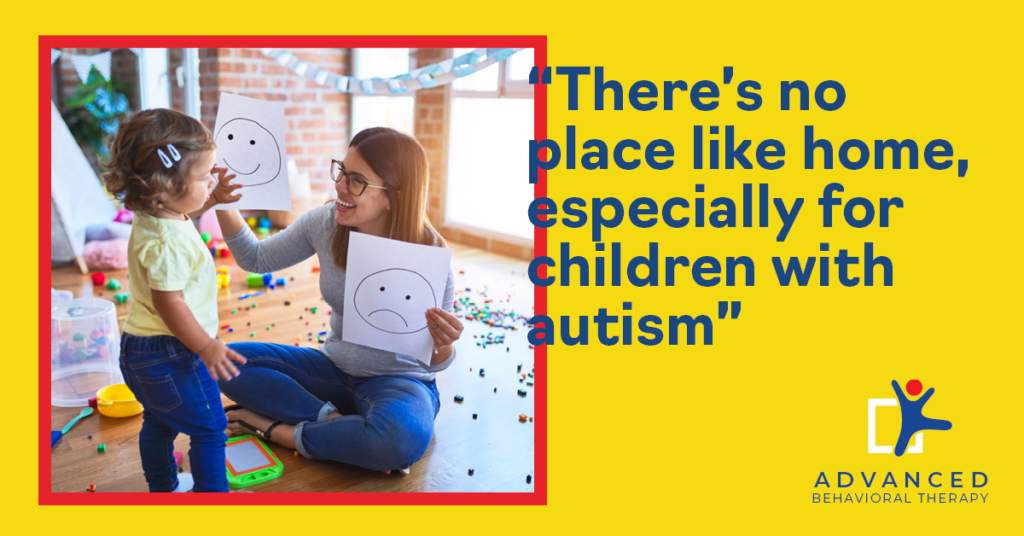
There’s no place like home, especially for children with autism. When working in a strange environment, the child needs to ignore external distractions and struggle to focus on the therapy throughout the session. In contrast, when a child receives therapy in the safest place they know, they are more likely to accept their new therapist and develop a strong, trusting relationship for therapy that is productive and offers a positive experience for all involved.
4. التعزيزات متاحة بسهولة.
ABA therapy places a heavy emphasis on reinforcers which motivate the child to follow directions and learn the skill that is being taught. In a child’s home, the therapist has all of the child’s favorite toys and activities at their disposal to be used as reinforcers. This can help spark motivation and significantly speed up the therapy process.
5. التدريس الطبيعي يعمل بشكل أفضل.
Administering therapy in a child’s natural environment enables the child to learn and practice functional skills in their natural setting. For example, a child can learn to make their bed, interact well with siblings, and clean up their toys. Instead of struggling to take the skills learned in therapy and bring them home, the child can practice these skills in their natural home environment, making them that much easier to implement on a daily basis.
6. تستفيد عملية العلاج من تحسين الأداءالمشاركة في أرينتال.
When therapy is conducted at home, parental and family involvement is automatically enhanced. Parents are always encouraged to observe the sessions, and other family members are invited to watch as well. This allows the child’s family to learn the goals of the therapy process and gives them an insider’s view on the skills and tools the child is working on now. This, in turn, can prompt the family to encourage the child to incorporate these skills in their daily routine. In addition, the family can learn which techniques can motivate the child and which factors can distract them from the task at hand. Finally, having the child’s family observe the therapy session can be a positive reinforcement for the child and push them to cooperate with the therapist at their fullest capacity.
Home-based ABA therapy can be uniquely beneficial for the child and their family. By choosing to have the therapy conducted in the child’s home setting, parents can give the child the tools they need for a more productive and positive therapy process.